
How to send SMS through SMPP from Kimi CLI
This guide explains how to connect Kimi CLI to Ozeki SMS Gateway's built in SMS MCP server, enabling the AI assistant to send and receive SMS messages through your own on-premises SMS gateway. You will learn how to install Ozeki SMS Gateway, create an MCP user account, generate an API key, register the MCP endpoint in Kimi CLI, and verify the setup by sending a test message.
Solution: How to send SMS from Kimi CLI
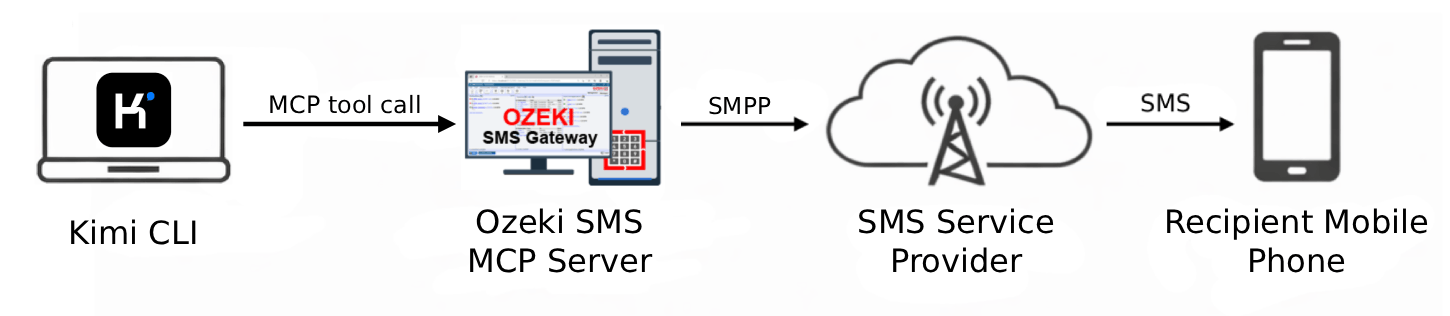
Kimi CLI connects to the SMPP SMS MCP Server through the MCP protocol, where Kimi CLI acts as the MCP client and Ozeki SMS Gateway acts as the MCP server. Ozeki SMS Gateway is installed on your local machine or server and connects to the SMS service provider over the internet using an SMPP client connection. When an SMS is sent, it first travels from Kimi CLI to the Ozeki SMS Gateway as an MCP tool call, and the gateway forwards it to the SMS service provider over SMPP, which delivers it to the recipient's mobile phone.
What is Kimi CLI?
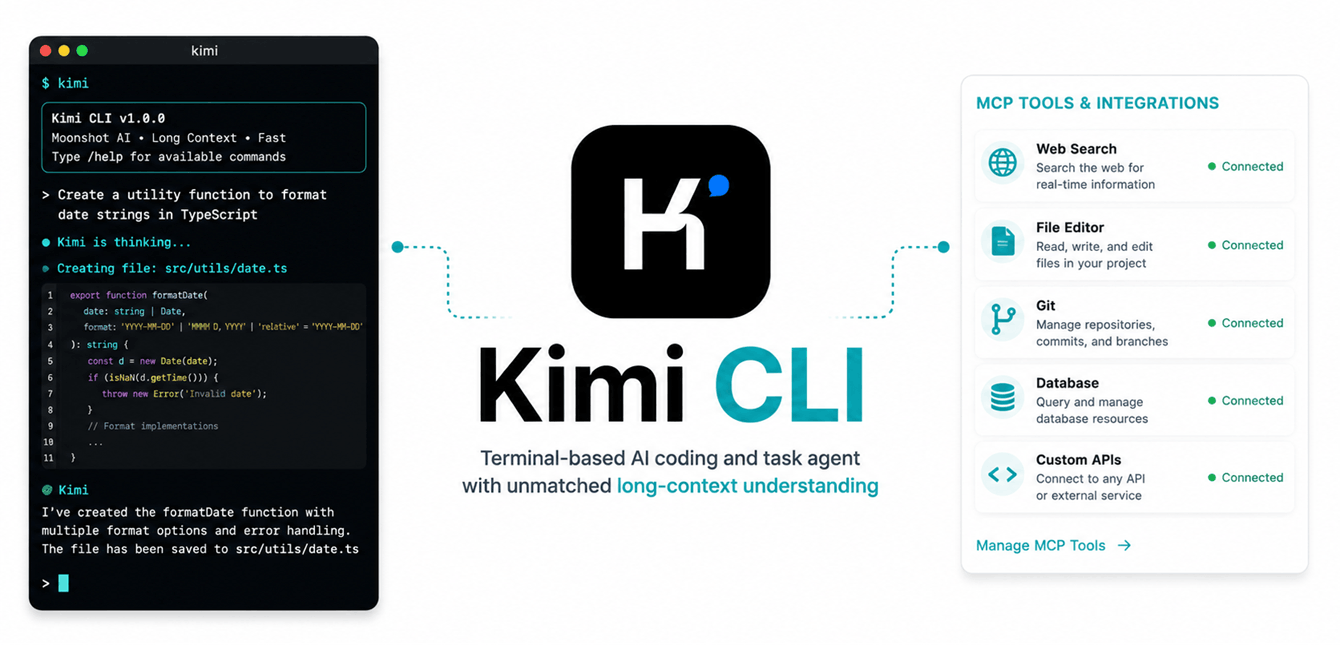
Kimi CLI is an open-source, terminal-based AI assistant developed by Moonshot AI that allows developers to interact with the Kimi large language model directly from the command line. It supports MCP servers, enabling it to be extended with external tools such as SMS messaging, database access, and more.
What is an SMPP SMS MCP Server?
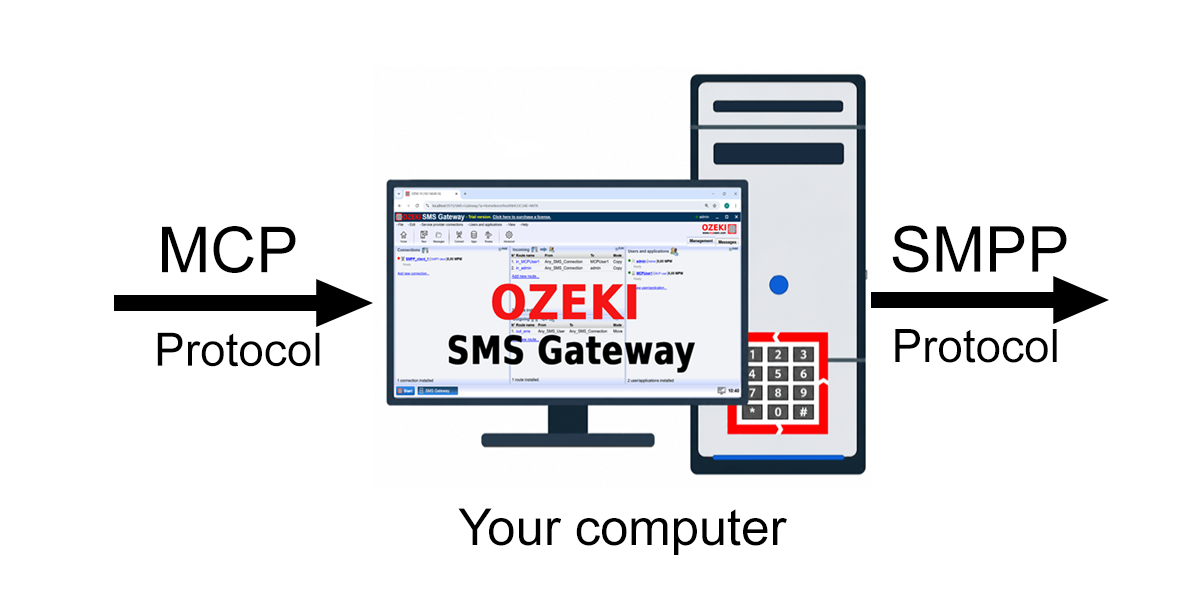
An SMPP SMS MCP Server is a standardized software bridge that uses the Model Context Protocol to connect AI assistants (like Claude) to an SMS gateway system such as Ozeki SMS Gateway, which in turn delivers messages to the mobile network over an SMPP client connection. It exposes tools like "send_message" or "list_incomings" that an AI can autonomously call to perform real-world texting tasks without custom coding. This allows users to simply ask an AI to "send John a reminder text" and have the AI securely execute the action through the server. The SMS MCP Server built into Ozeki SMS Gateway also makes receiving SMS messages possible.
Download Ozeki SMS Gateway
To use this solution you need to install the SMS Gateway on your system.
Download the software: SMS Gateway
https://ozeki-sms-gateway.com/p_727-download-sms-gateway.html
Steps to follow
You will need Kimi CLI installed on your system. If you have not set it up yet, follow our Kimi CLI installation guide.
- Install Ozeki SMS Gateway
- Setup the SMPP SMS connection
- Create an MCP user account
- Kimi CLI SMS MCP Server Config
- Add the SMS MCP Server config to Kimi CLI
- Send a test SMS
- Check the SMS in the SMS Gateway logs
Install Ozeki SMS Gateway
For a full tutorial on installing Ozeki SMS Gateway, check out our How to install Ozeki SMS Gateway on Windows guide.
Before you can use the SMS MCP Server, you need to install Ozeki SMS Gateway on your Windows machine or server. Download the installer zip file from the website, extract it, and run the executable to complete the installation. Once installed, the gateway will start automatically and its web-based management interface will be accessible from your browser.
Setup the SMPP SMS connection
For a full tutorial on setting up an SMPP Client connection, check out our SMPP Client Connection guide.
Before creating the MCP user, you need to connect Ozeki SMS Gateway to the mobile network by setting up an SMPP client. In the Connections panel, select Add new connection, and install a new SMPP client connection. Enter the host, port, and credentials provided by your SMS service provider, then save and activate the connection to bring the gateway online.
Create an MCP user account
For a full tutorial on creating an MCP User, check out our Create an MCP User guide.
Click Add new user/application, and select the MCP user type from the list. Enter a username and password for the account, then open the Advanced tab to generate an API key. Copy this key and store it in a safe location, as you will need it in the next steps.
Kimi CLI MCP server configuration
# Kimi CLI MCP configuration file location:
C:\Users\%USERPROFILE%\.kimi\mcp.json

# Add the following block to mcp.json
# Replace {address} with your Ozeki SMS Gateway host IP or hostname
# Replace your-bearer-token with the API key generated for your MCP user account
{
  "mcpServers": {
    "ozeki": {
      "command": "uvx",
      "args": [
        "mcp-proxy",
        "--transport", "streamablehttp",
        "-H", "Authorization", "Bearer your-bearer-token",
        "http://{address}:9529/mcp"
      ]
    }
  }
}
Example prompt
Send an SMS to +36301234567, the message should be "Hello from Kimi".
Add the SMS MCP Server config to Kimi CLI
The following video shows how to add the Ozeki SMPP SMS MCP Server to Kimi CLI step-by-step.
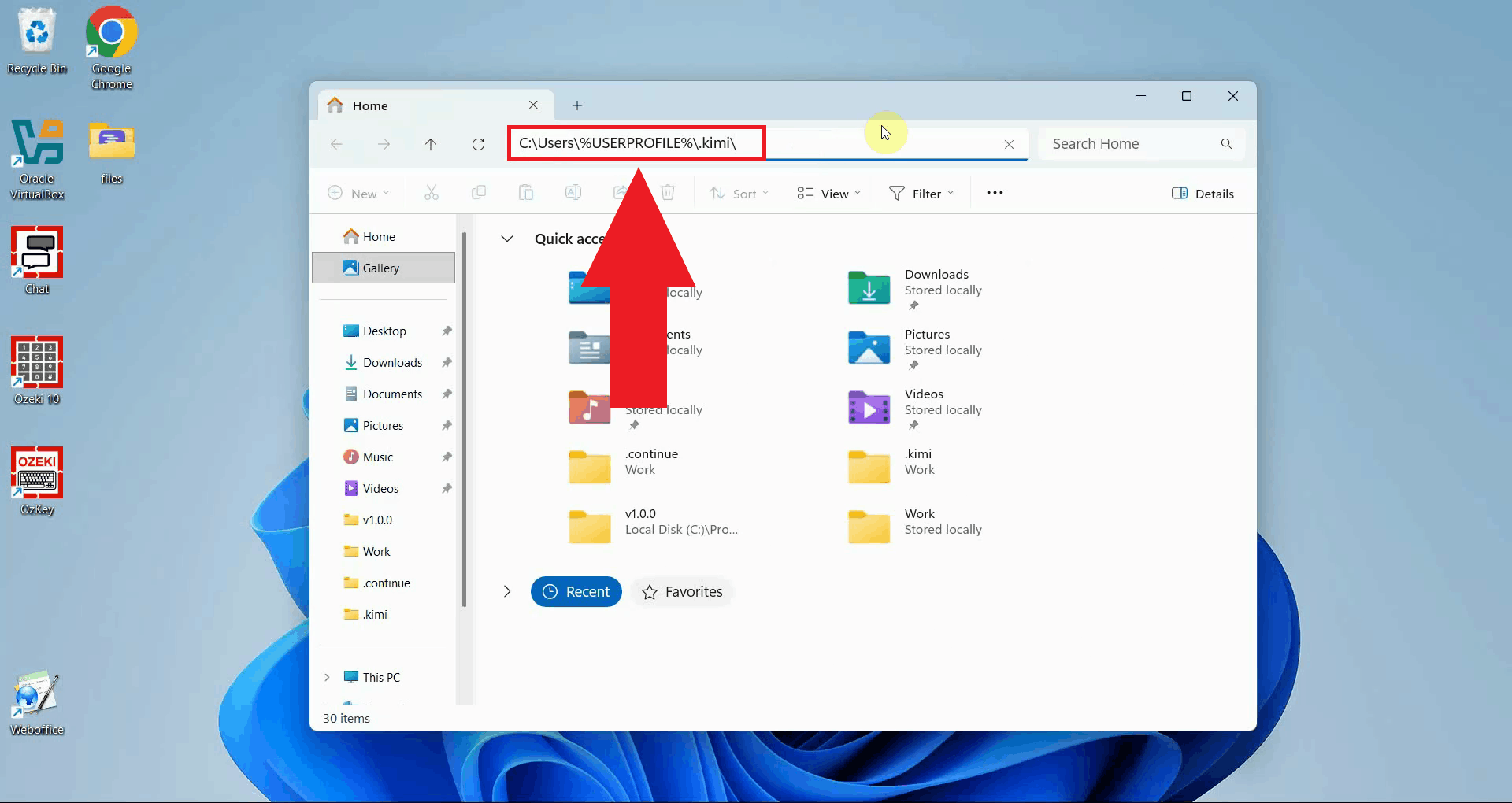
Navigate to the Kimi CLI configuration directory at
C:\Users\%USERPROFILE%\.kimi\ using File Explorer. You can open
this folder quickly by typing %USERPROFILE%\.kimi directly into the
File Explorer address bar and pressing Enter (Figure 1).
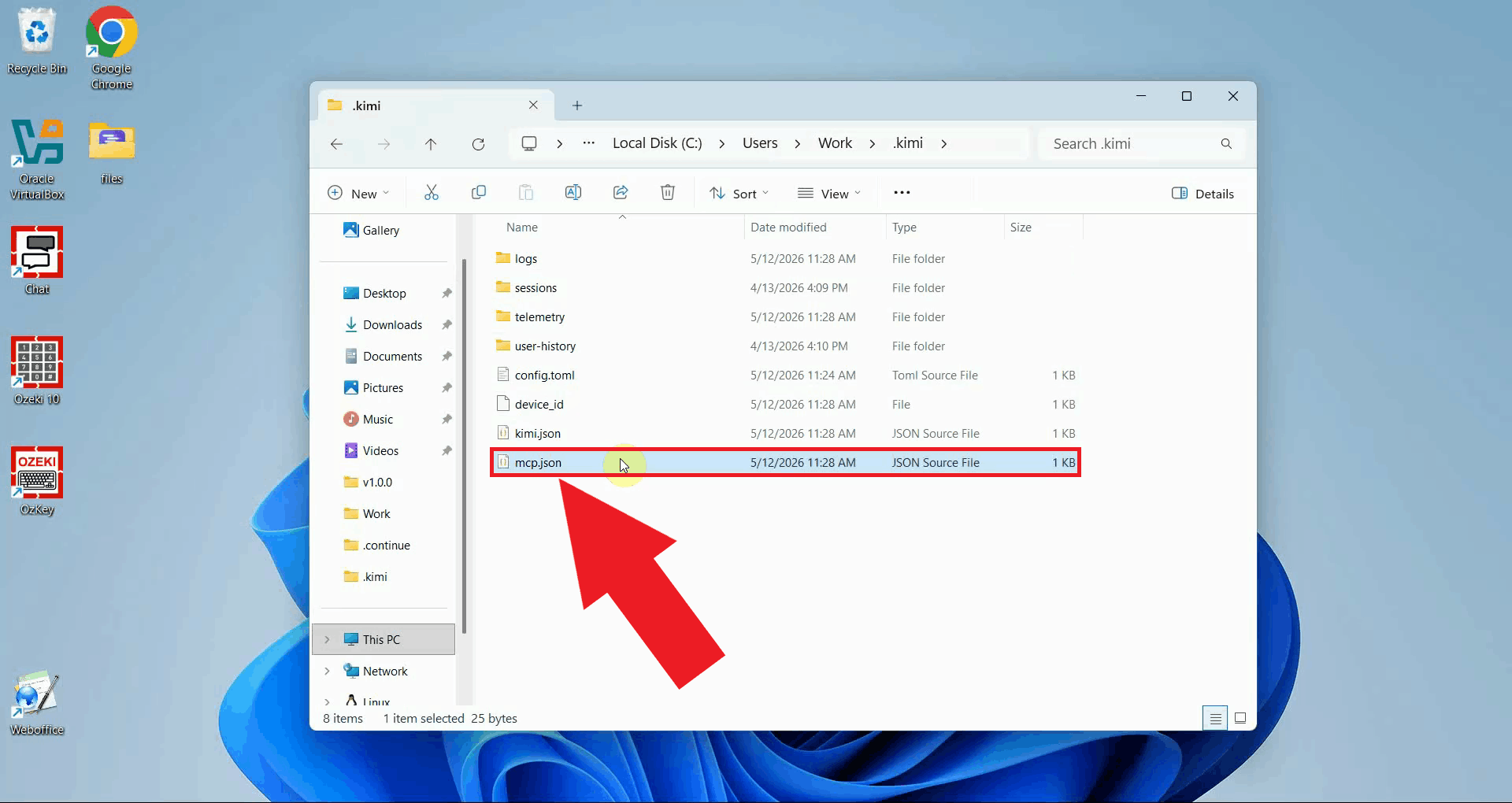
Open the mcp.json file in a text editor such as Notepad. If the file
does not exist yet, create a new file named mcp.json in the
.kimi folder. This file stores all MCP server entries that Kimi CLI
should connect to on startup (Figure 2).
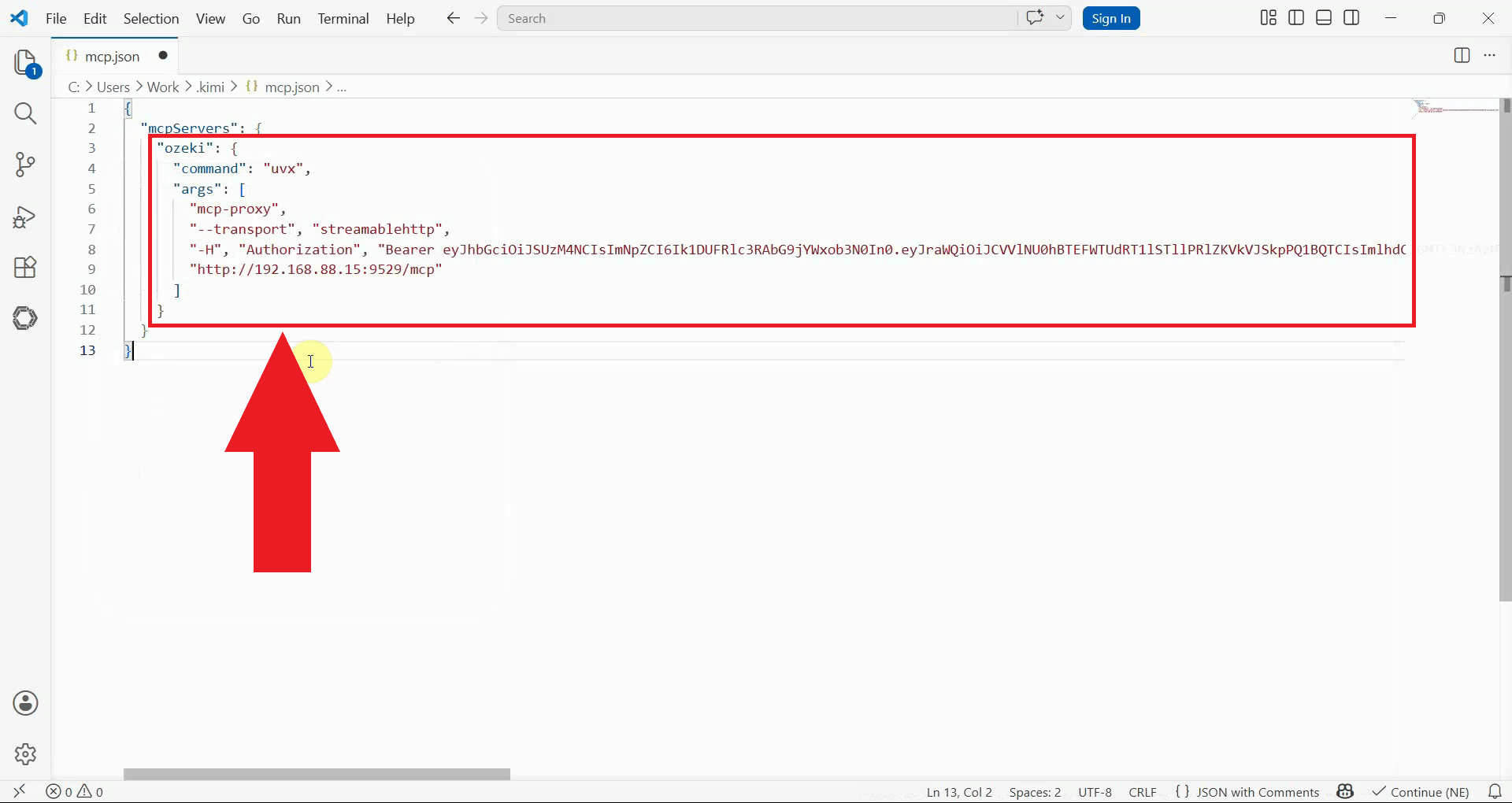
Add the Ozeki SMPP SMS MCP Server entry to the file as shown below.
Replace {address} with your gateway's IP
address or hostname, and replace your-bearer-token with the API key
you generated for your MCP user account (Figure 3).
{
  "mcpServers": {
    "ozeki": {
      "command": "uvx",
      "args": [
        "mcp-proxy",
        "--transport", "streamablehttp",
        "-H", "Authorization", "Bearer your-bearer-token",
        "http://{address}:9529/mcp"
      ]
    }
  }
}
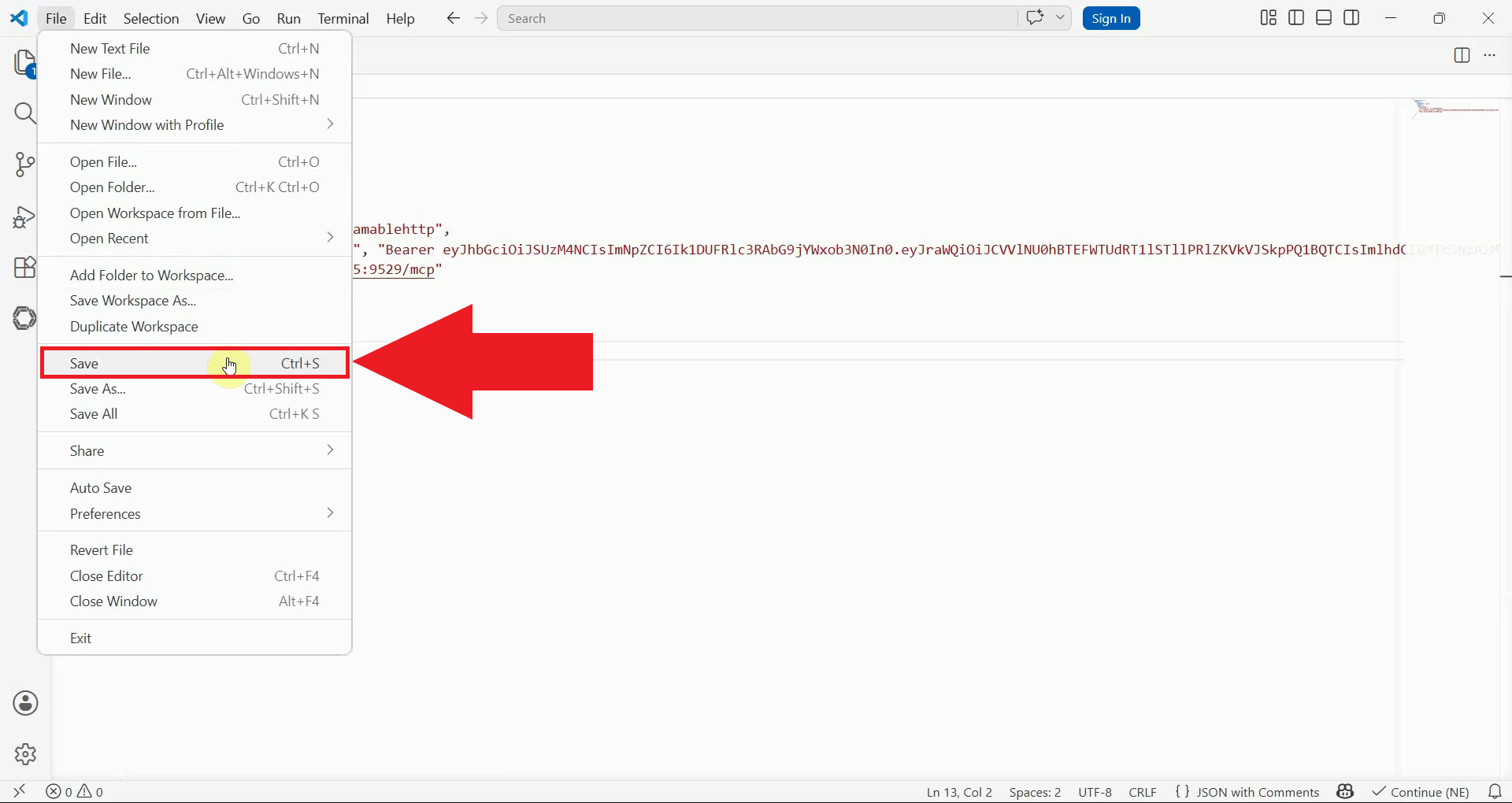
Save the configuration file. The changes will take effect the next time Kimi CLI is started (Figure 4).
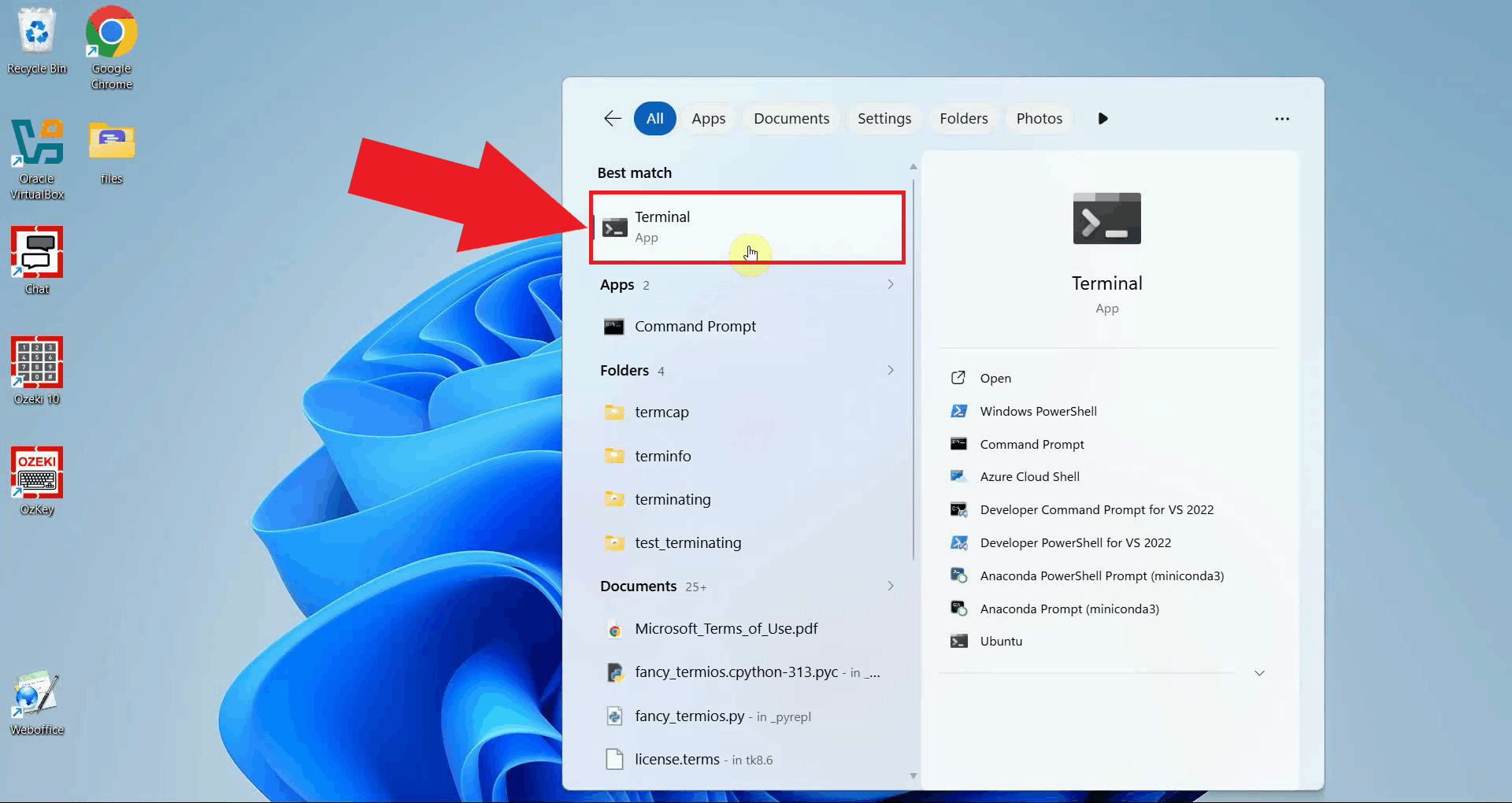
Open a terminal window by searching for Terminal in the Start menu. You will launch Kimi CLI from this terminal (Figure 5).
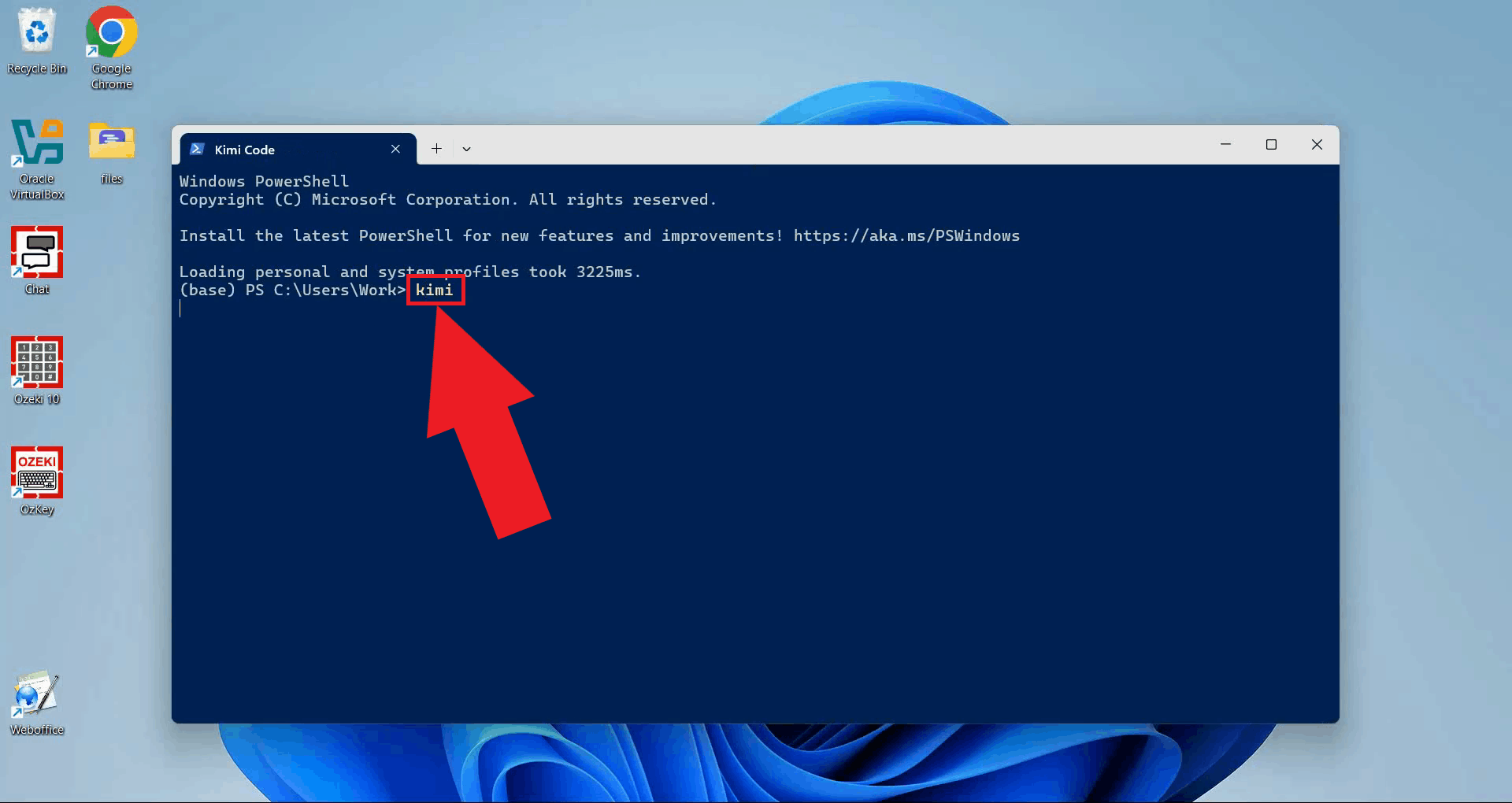
Type kimi and press Enter to launch Kimi CLI. It will start up and
attempt to connect to all MCP servers listed in the configuration file, including
the Ozeki SMPP SMS MCP Server you just added (Figure 6).
kimi
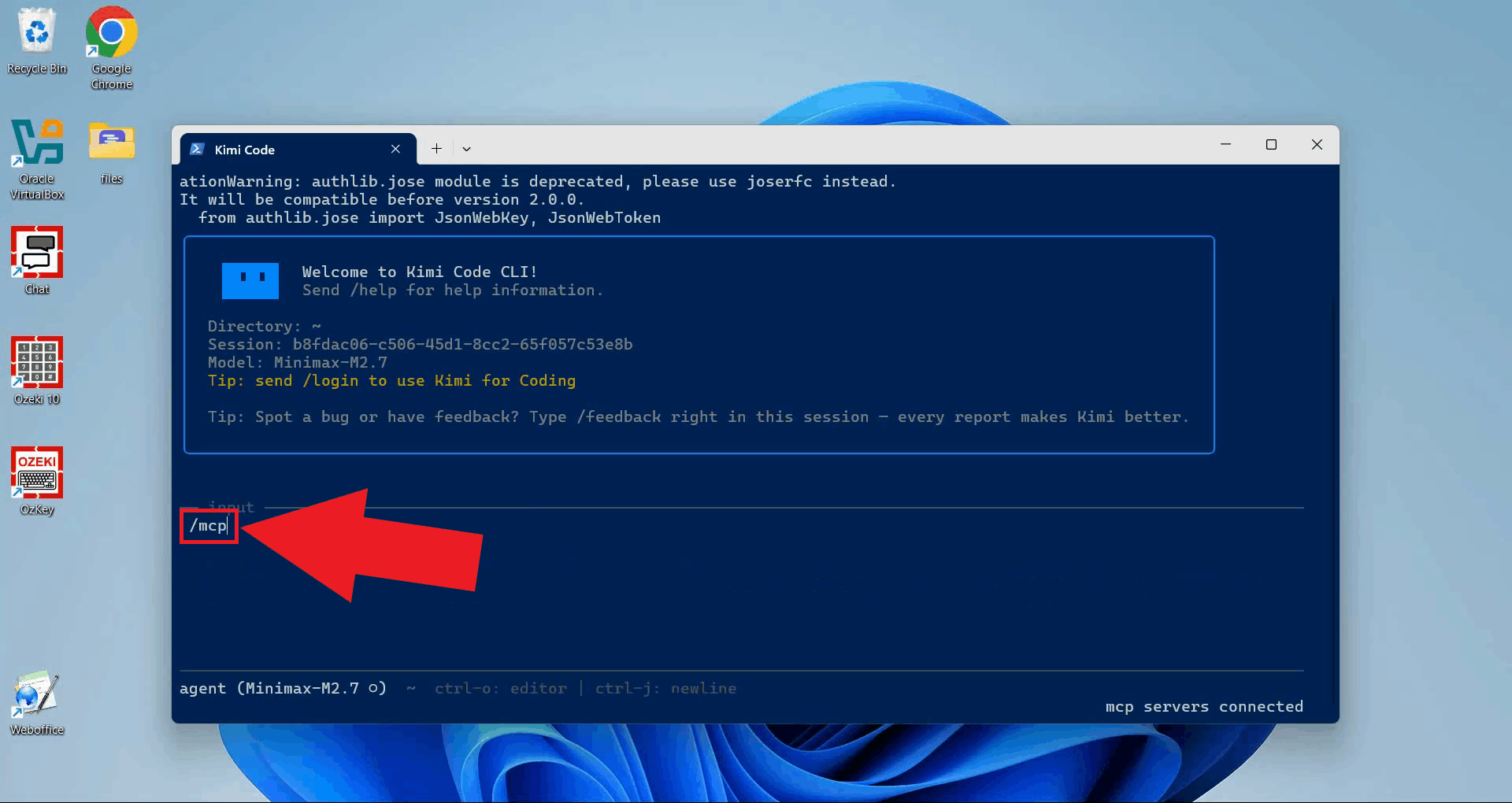
Once Kimi CLI has started, run the /mcp command to display the
connection status of all configured MCP servers (Figure 7).
/mcp
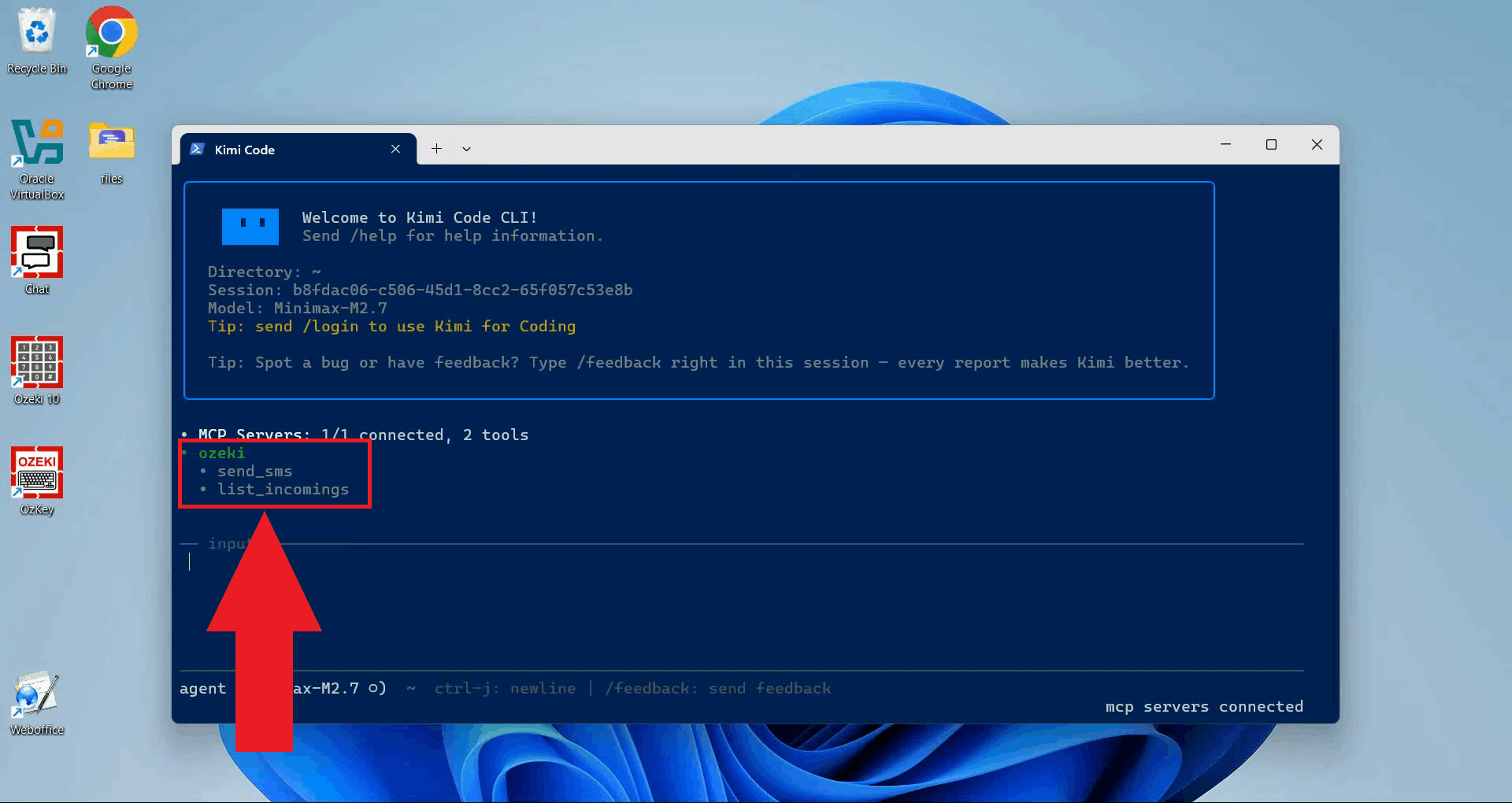
In the output, verify that the ozeki MCP server is listed and its status
shows as connected. This confirms that Kimi CLI has successfully reached the Ozeki
SMS Gateway through the mcp-proxy layer using the configured
endpoint and API key (Figure 8).
Send a test SMS
The following video shows how to send an SMS message from Kimi CLI using the Ozeki SMPP SMS MCP Server step-by-step.
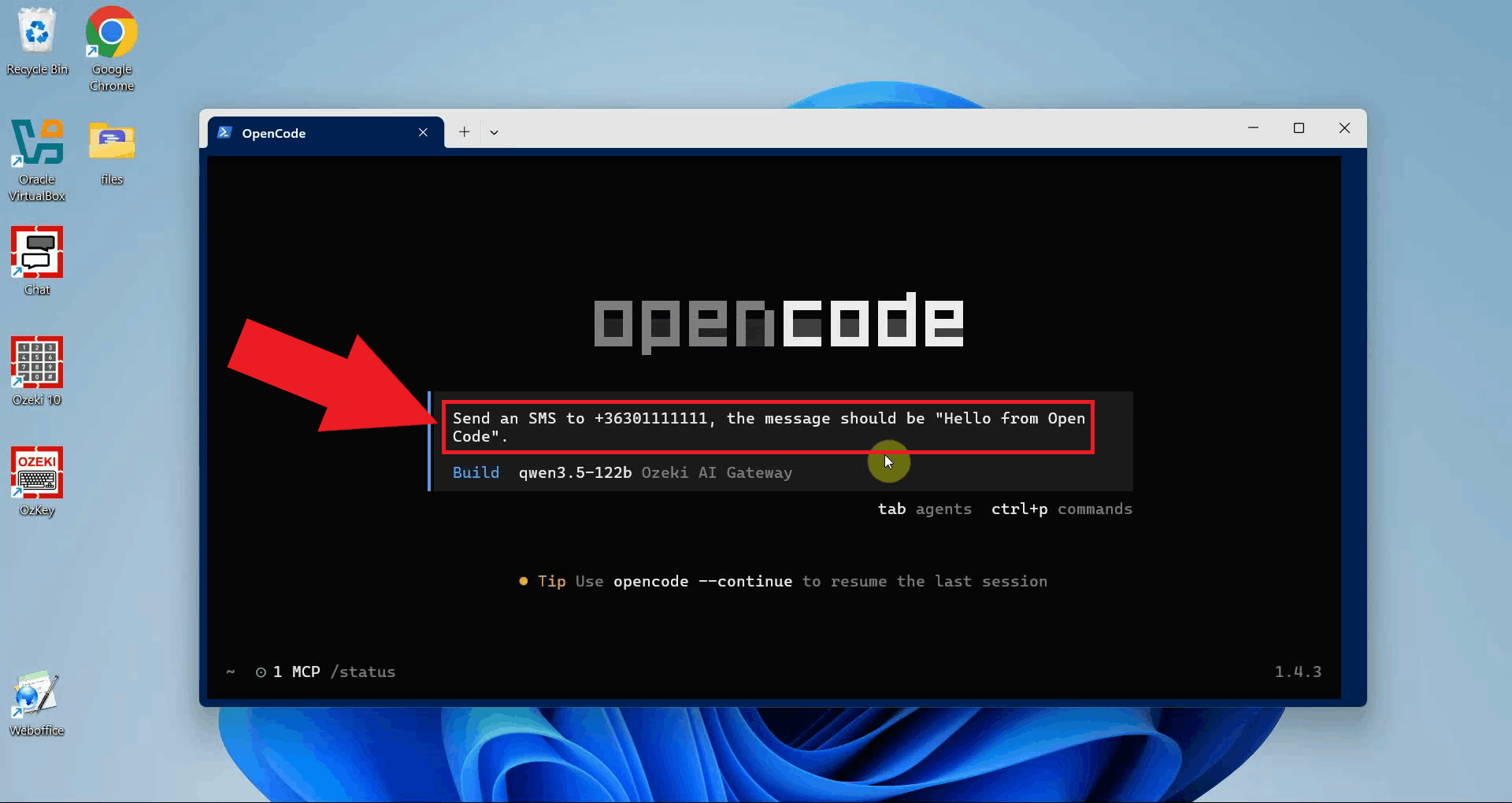
In the Kimi CLI input, type your SMS request in plain language and press Enter. The AI agent will interpret the request and invoke the appropriate MCP tool to deliver the message (Figure 9).
Send an SMS to +36301234567, the message should be "Hello from Kimi".
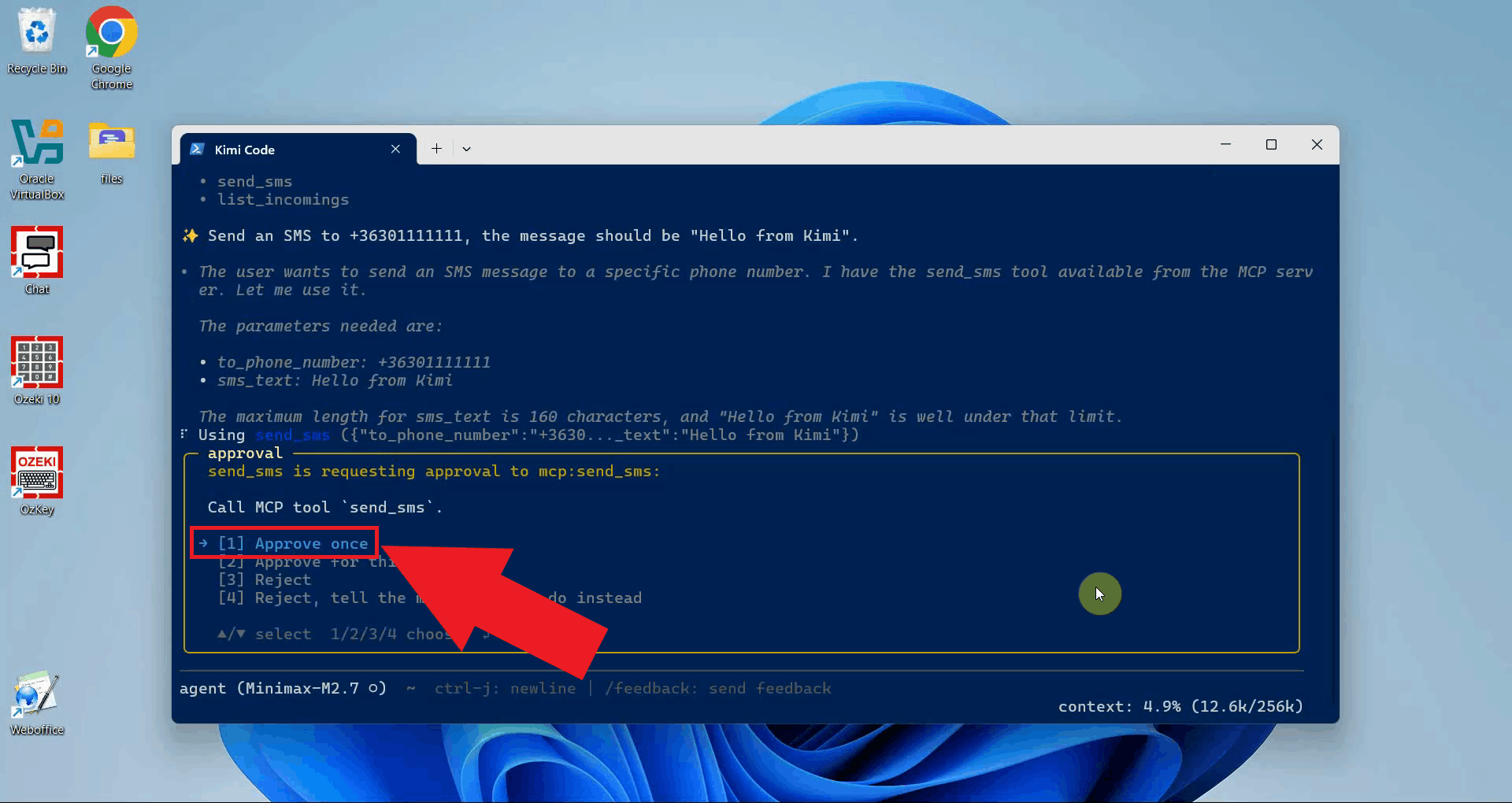
Kimi CLI may ask for your approval before invoking the SMS tool. Review the proposed tool call and confirm to allow the AI agent to proceed (Figure 10).
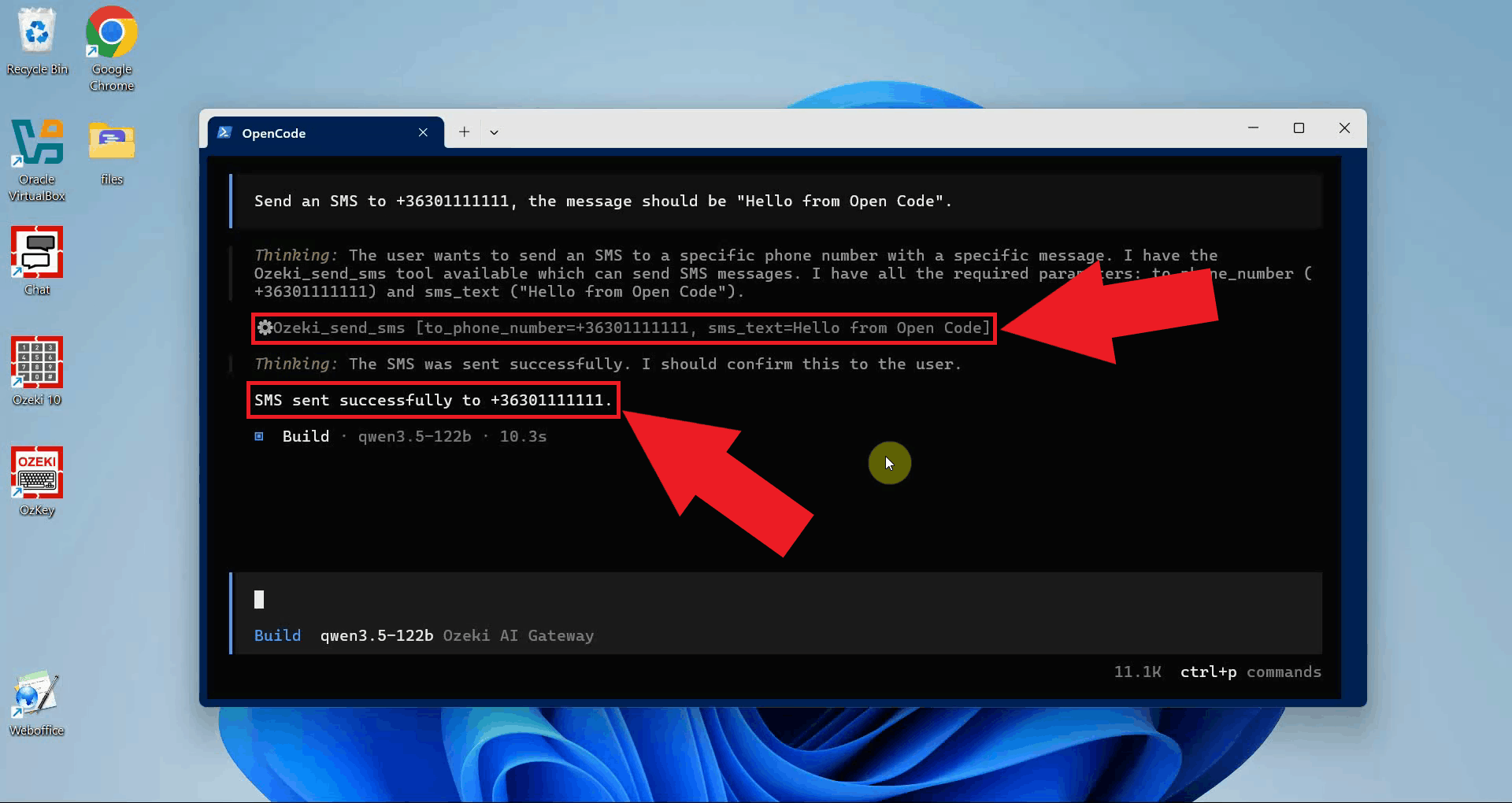
Once the tool has been executed, the result will appear in the Kimi CLI terminal. A successful response confirms that the message was submitted to the gateway and handed off for delivery (Figure 11).
Check the SMS in the SMS Gateway logs
The following video shows how to check the SMS in the logs in Ozeki SMS Gateway step-by-step.
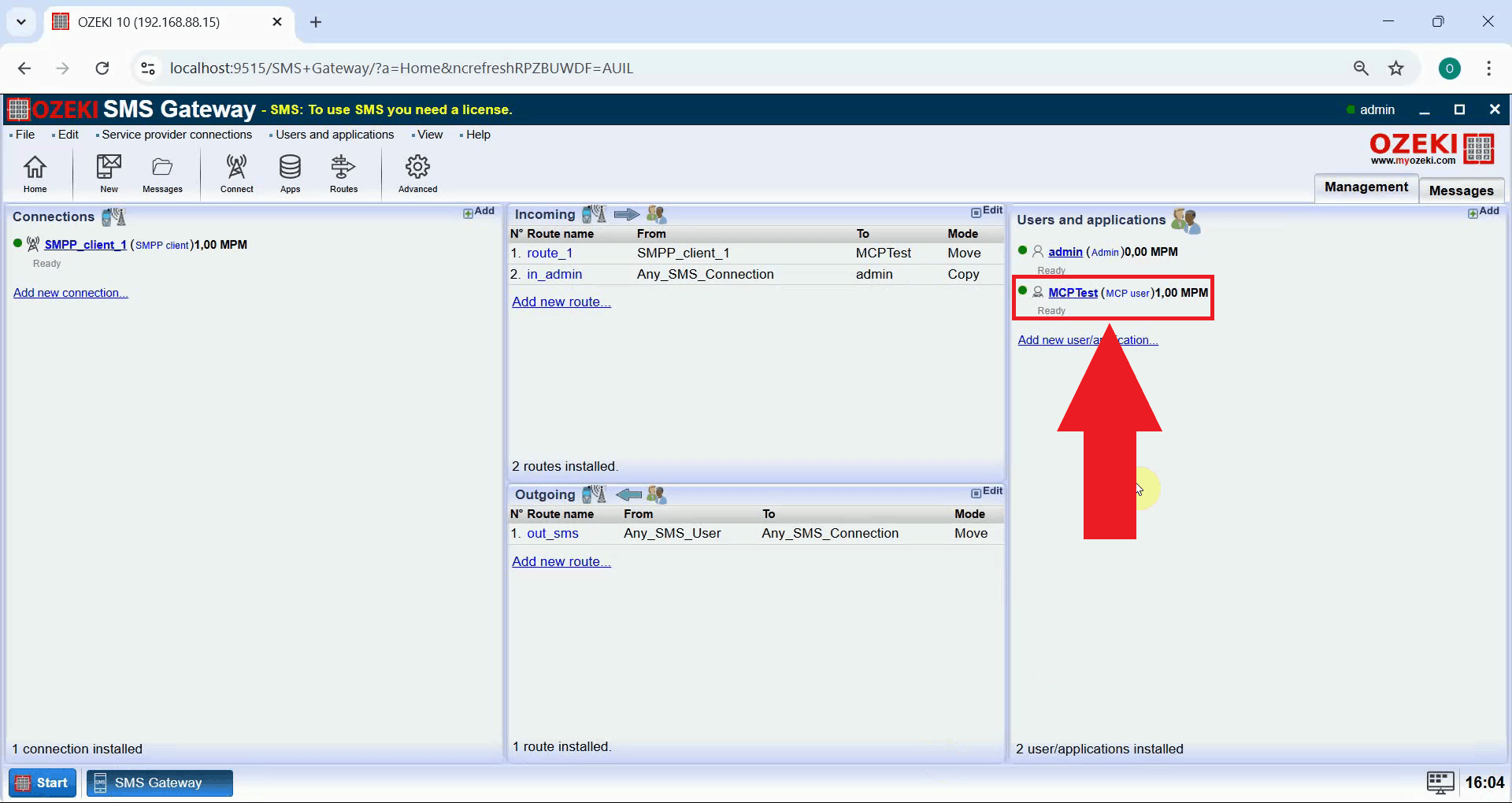
Open Ozeki SMS Gateway in your browser and navigate to the MCP user details page by clicking on the MCP user entry in the Users and applications panel (Figure 12).
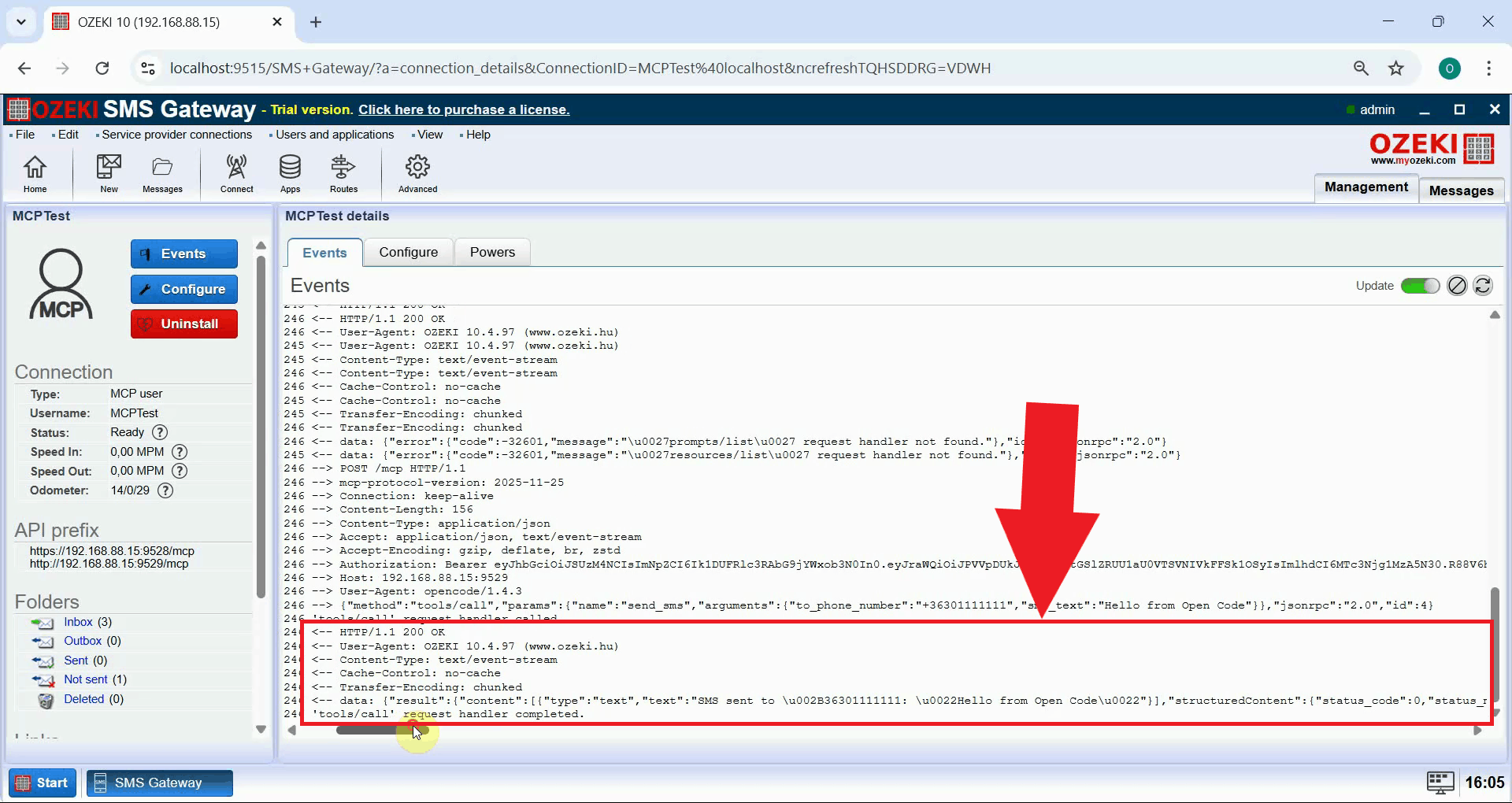
In the MCP user event log, you should see an entry for the outgoing message, including the recipient number and message text, confirming that it was successfully processed by the gateway (Figure 13).
Conclusion
In this guide, you have learned how to connect Kimi CLI to Ozeki SMS Gateway's built in SMS MCP server and use it to send SMS messages directly from the chat interface. By installing the gateway, setting up a mobile network connection, creating an MCP user account, and registering the MCP endpoint in Kimi CLI, you now have a fully functional on-premises SMS integration that your AI assistant can use to communicate with any mobile phone.