
How to configure the Ozeki SMS MCP Server in Kilo Code
This guide walks you through adding the Ozeki SMS MCP Server to your Kilo Code configuration so that the AI model can send and receive SMS messages on your behalf. By following this tutorial, you will learn how to edit the Kilo Code configuration file, add the Ozeki SMS Gateway as an MCP server, and verify the connection in the Kilo Code settings.
What is an MCP server?
An MCP (Model Context Protocol) server exposes tools that an AI model can call during a conversation. In this setup, the Ozeki SMS MCP Server provides SMS tools such as sending messages and listing incoming SMS. Kilo Code connects to the MCP server over HTTP and communicates with it directly using the configured URL and API key, making it straightforward to add mobile messaging capabilities to any Kilo Code workflow.
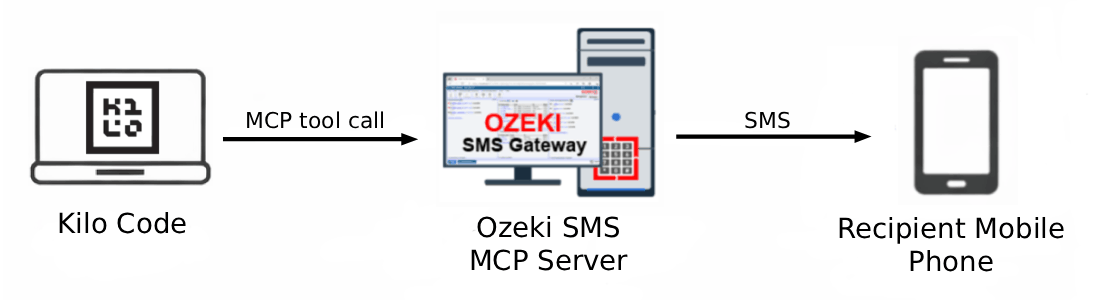
Kilo Code MCP server configuration
# Kilo Code configuration file location:
C:\Users\%USERPROFILE%\.config\kilo\kilo.jsonc

# Add the following block inside the "mcp" property in kilo.jsonc
# Replace the URL with your Ozeki SMS Gateway address and the Bearer token with your API key
"mcp": {
    "Ozeki": {
        "type": "remote",
        "url": "http://{address}:9529/mcp",
        "headers": {
            "Authorization": "Bearer your-bearer-token"
        },
        "enabled": true,
        "timeout": 15000
    }
}

# To verify the connection after saving, navigate to:
# Settings -> Agent Behaviour -> MCP Servers
Steps to follow
We assume Ozeki SMS Gateway is already installed on your system and you have already created an MCP user account with an API key. You will also need Kilo Code installed on your system. If you have not set it up yet, follow our Kilo Code installation guide.
Video tutorial
The following video shows how to add the Ozeki SMS MCP Server to Kilo Code step-by-step. The video covers editing the configuration file, launching Kilo Code, and verifying the MCP server connection.
Step 1 - Edit the Kilo Code config
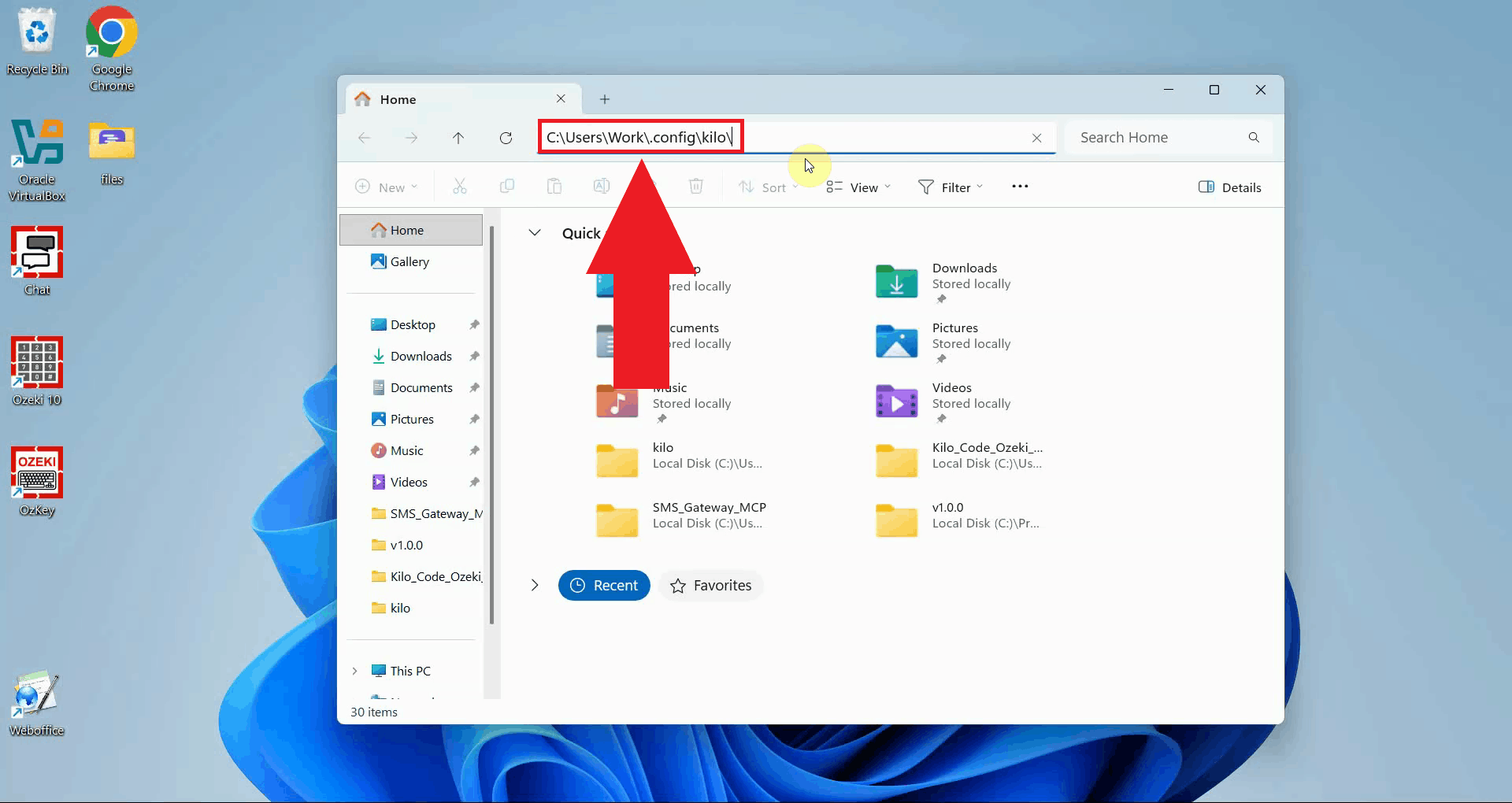
Navigate to the Kilo Code configuration folder at C:\Users\%USERPROFILE%\.config\kilo\
using File Explorer (Figure 1).
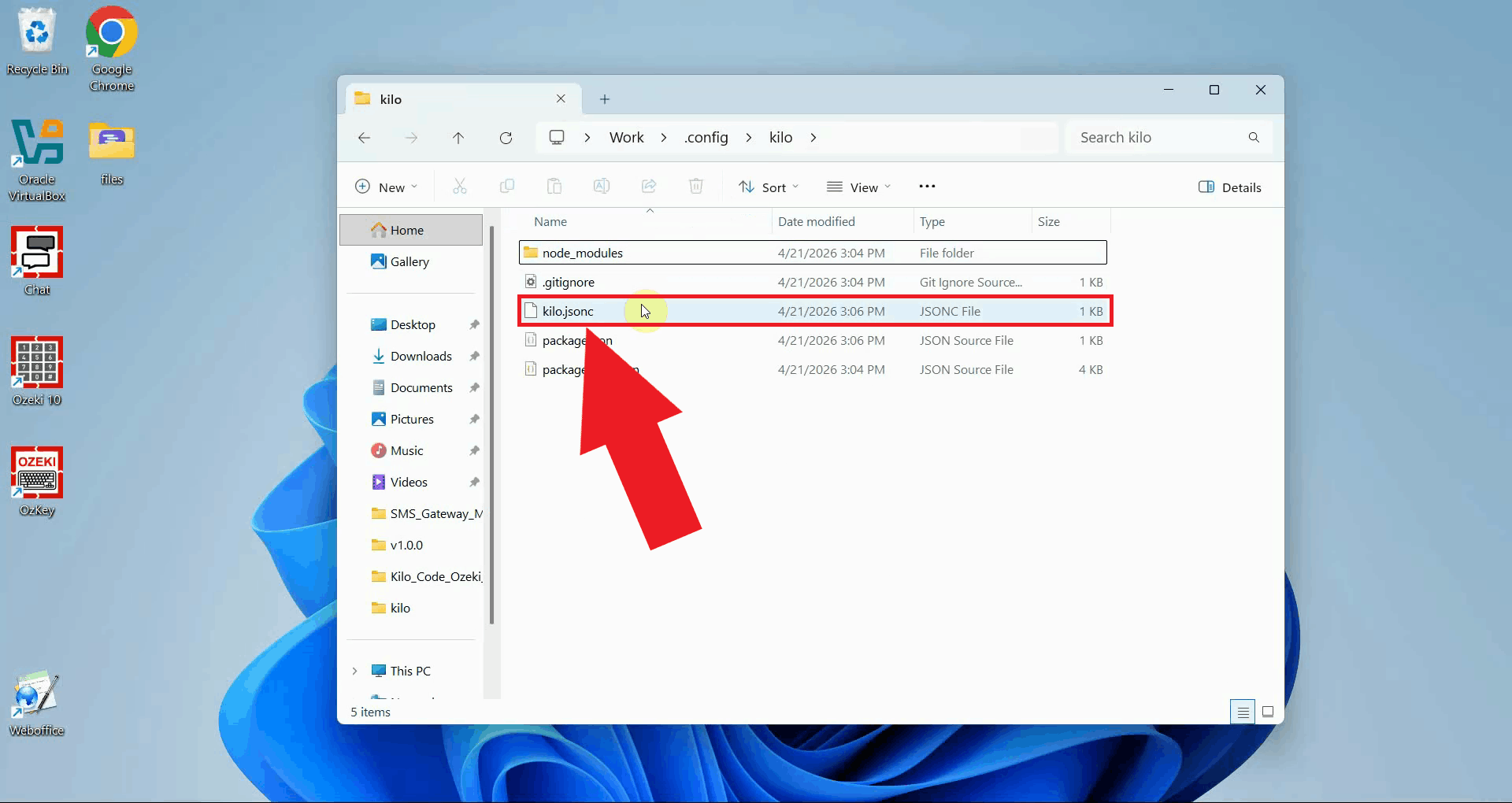
Open the kilo.jsonc file in a text editor such as Notepad. This file
stores all Kilo Code configuration, including any MCP servers that the extension
should connect to on startup (Figure 2).
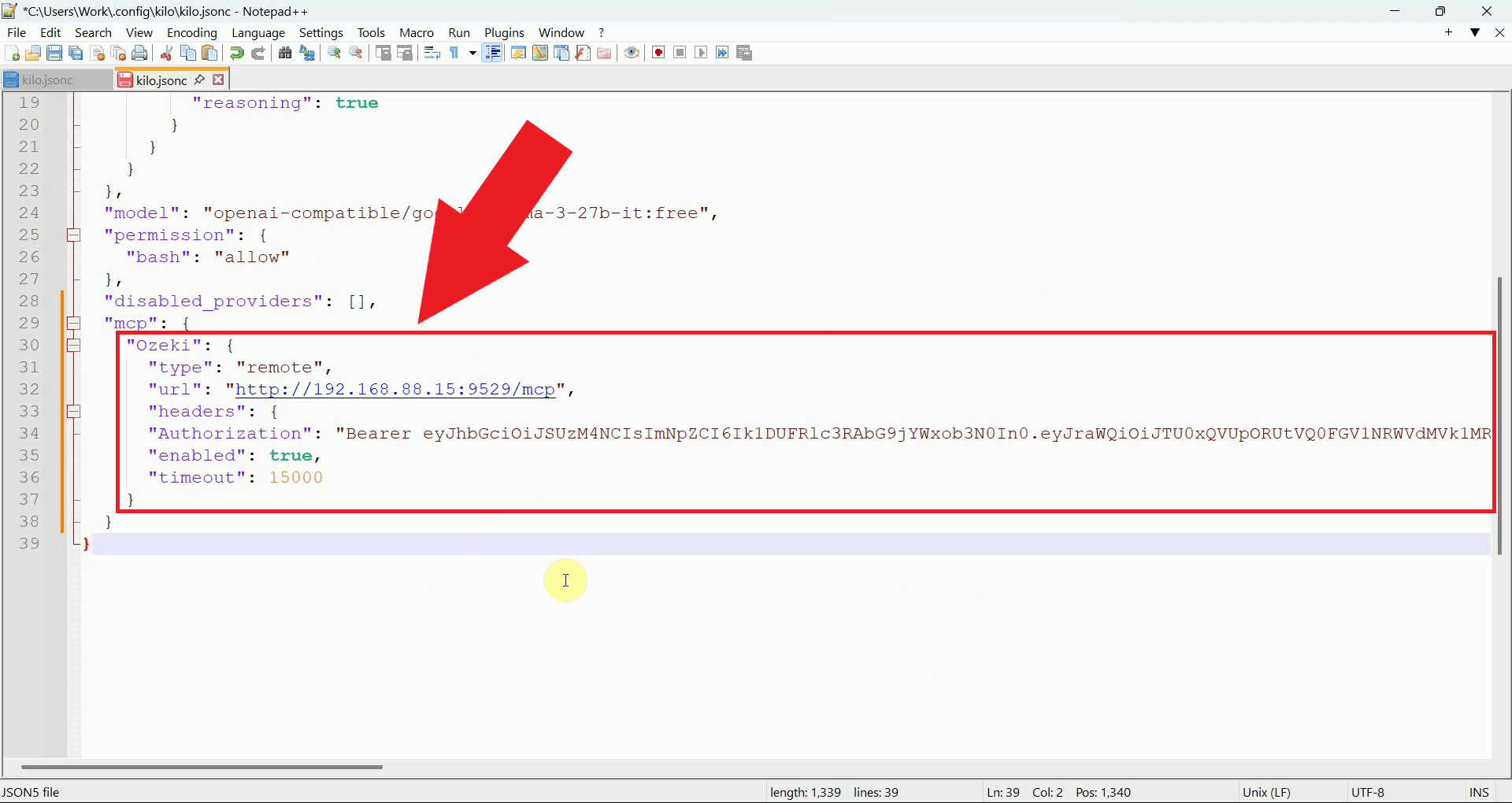
Locate the mcp property in the file and add the Ozeki SMS MCP Server
entry as shown below. Replace the URL with the address of your Ozeki SMS Gateway
installation and the Bearer token with the API key you generated for your MCP user
account. Save the file after making the changes (Figure 3).
"mcp": {
    "Ozeki": {
        "type": "remote",
        "url": "http://{address}:9529/mcp",
        "headers": {
            "Authorization": "Bearer your-bearer-token"
        },
        "enabled": true,
        "timeout": 15000
    }
}
Step 2 - Open Kilo Code in VS Code
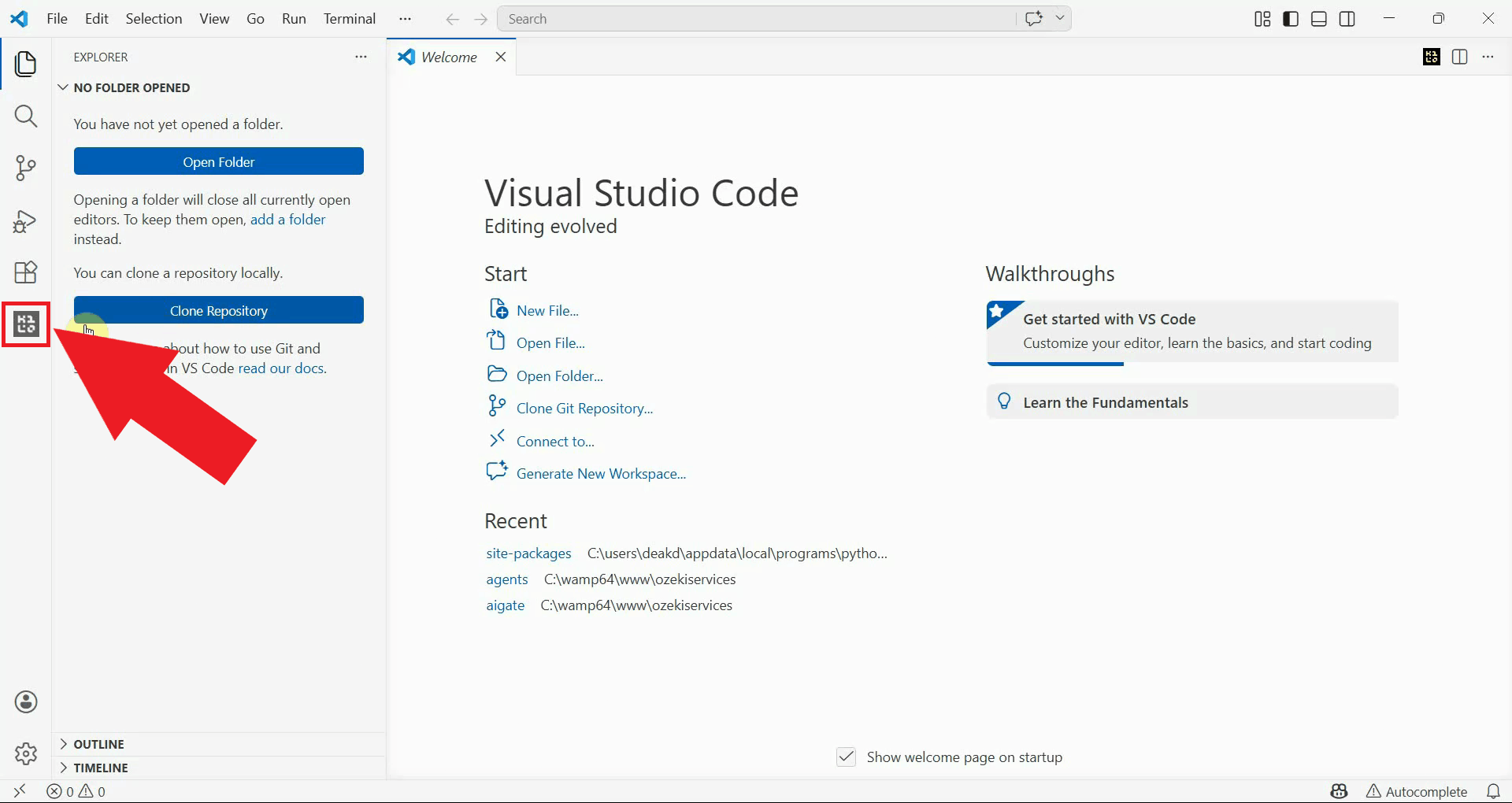
Open Visual Studio Code. It is important to launch a fresh instance after editing the configuration file so that Kilo Code loads the updated settings. Click the Kilo Code icon in the left sidebar to open the extension panel (Figure 4).
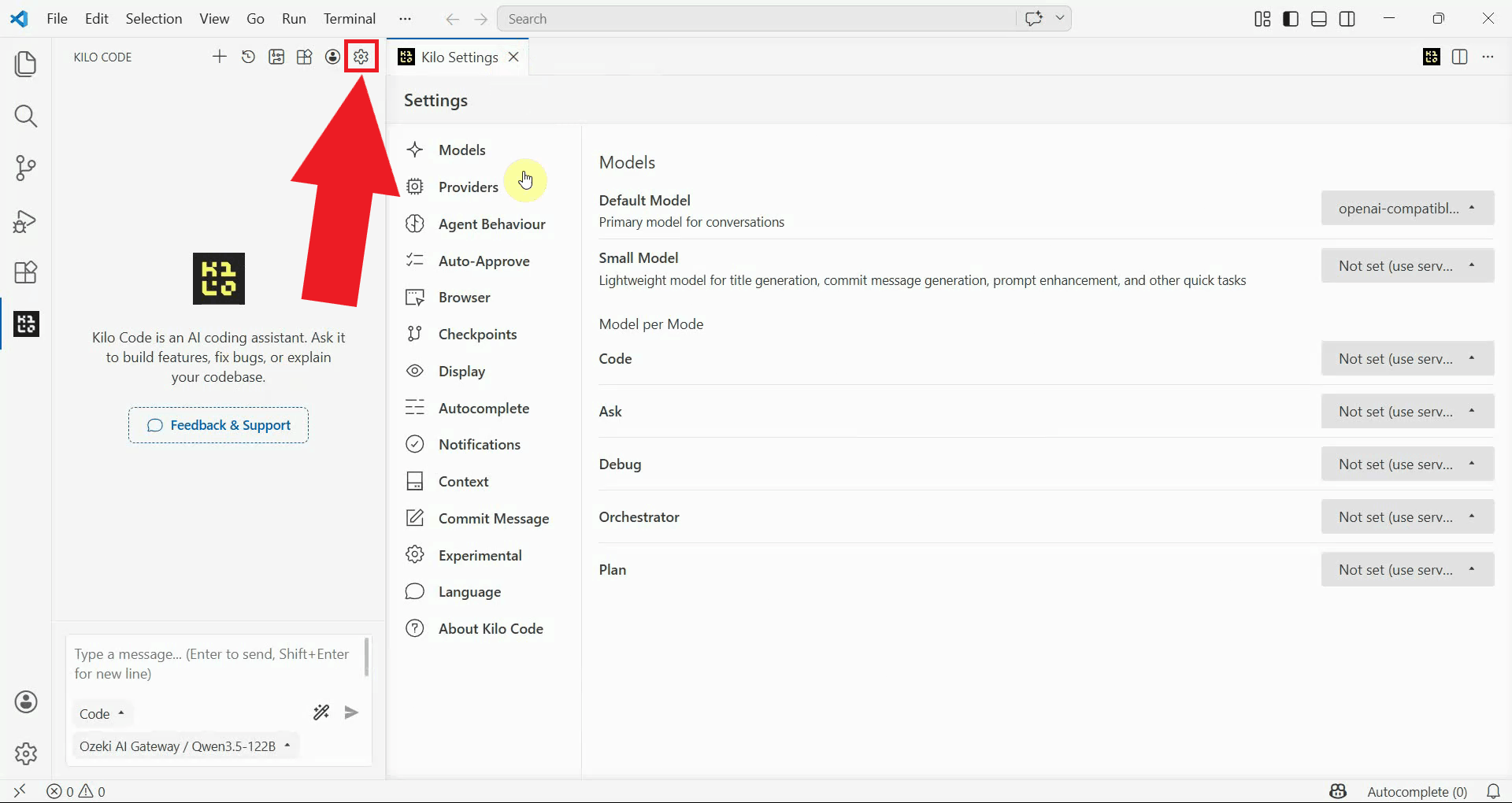
In the Kilo Code panel, click the settings icon to open the Kilo Code settings page (Figure 5).
Step 3 - Verify the MCP server connection
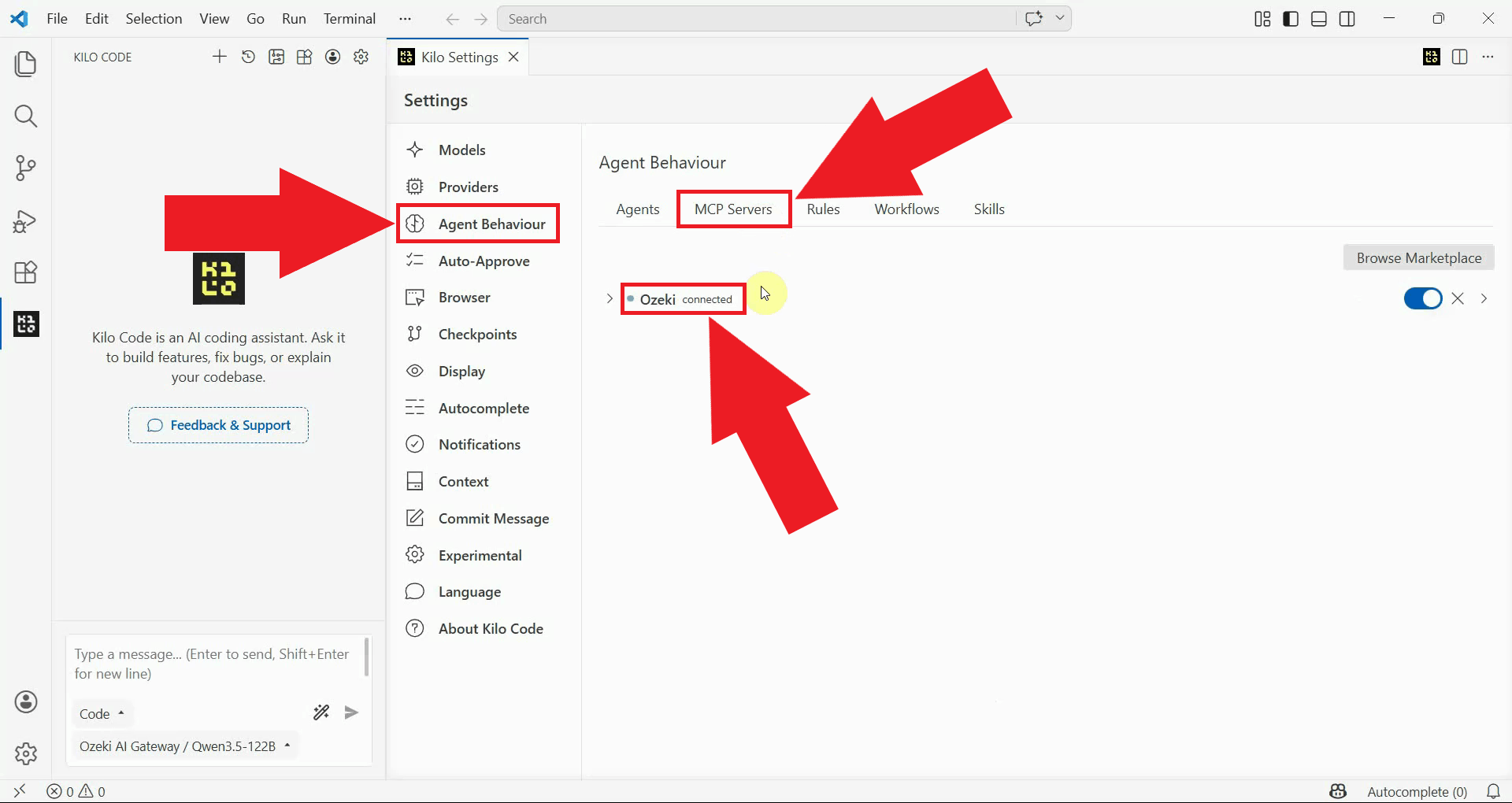
In the Kilo Code settings, navigate to Agent Behaviour and open the MCP Servers tab. Verify that Ozeki appears in the list and that its status shows as connected. This confirms that Kilo Code has successfully reached your gateway using the configured URL and API key (Figure 6).
Summary
You have successfully configured the Ozeki SMS MCP Server in Kilo Code. Kilo Code can now send and receive SMS messages through your gateway using plain language prompts. This makes it straightforward to add mobile messaging capabilities to any Kilo Code workflow.